
MUNICIPAL CONNECTIVITY ENGINE
Public Safety Connectivity Built for the Real World
From urban centers to remote parks, VideoGuard provides resilient, high-bandwidth pipelines for mission-critical intelligence. Our endpoints bridge the gap between fixed infrastructure and mobile response units.
We ensure maximum uptime through multi-network redundancy, delivering seamless coverage even in high-density downtowns or isolated wilderness areas. By utilizing diverse carrier pathways, VideoGuard keeps your safety operations constantly online and fully protected regardless of local network congestion.

One Platform. Multiple Ways to Connect.
Municipal IT requires flexibility. VideoGuard endpoints support a diverse range of connectivity protocols, ensuring persistent data flow in any environment—from urban fiber grids to remote mobile deployments.
Cellular (LTE/5G)
Redundant carrier support with FirstNet and Frontline priority integration for high-traffic municipal zones.
Fiber Infrastructure
High-capacity direct backhaul for permanent VPU installations, leveraging existing city-wide fiber networks.
Satellite (LEO)
Low-latency Starlink integration for remote operations where traditional terrestrial networks are unavailable.
Tactical Mesh
Self-healing radio mesh for local site-wide connectivity between MVR units during mass-scale events.

Public Safety Doesn’t Always Happen Where the Network Does.
Critical missions often extend beyond fixed fiber and cellular coverage. VideoGuard bridges the connectivity gap with edge-first intelligence that maintains operational continuity in the most challenging environments.

A Park Doesn’t Need a Cellular Modem on Every Pole
Strategic connectivity doesn't mean over-complicating infrastructure. VideoGuard leverages existing municipal assets to create high-bandwidth bubbles where they are needed most. By utilizing mesh technology and localized edge processing, we reduce carrier dependency while maintaining 24/7 high-definition situational awareness across wide recreational areas.
Connectivity That Moves With the Mission
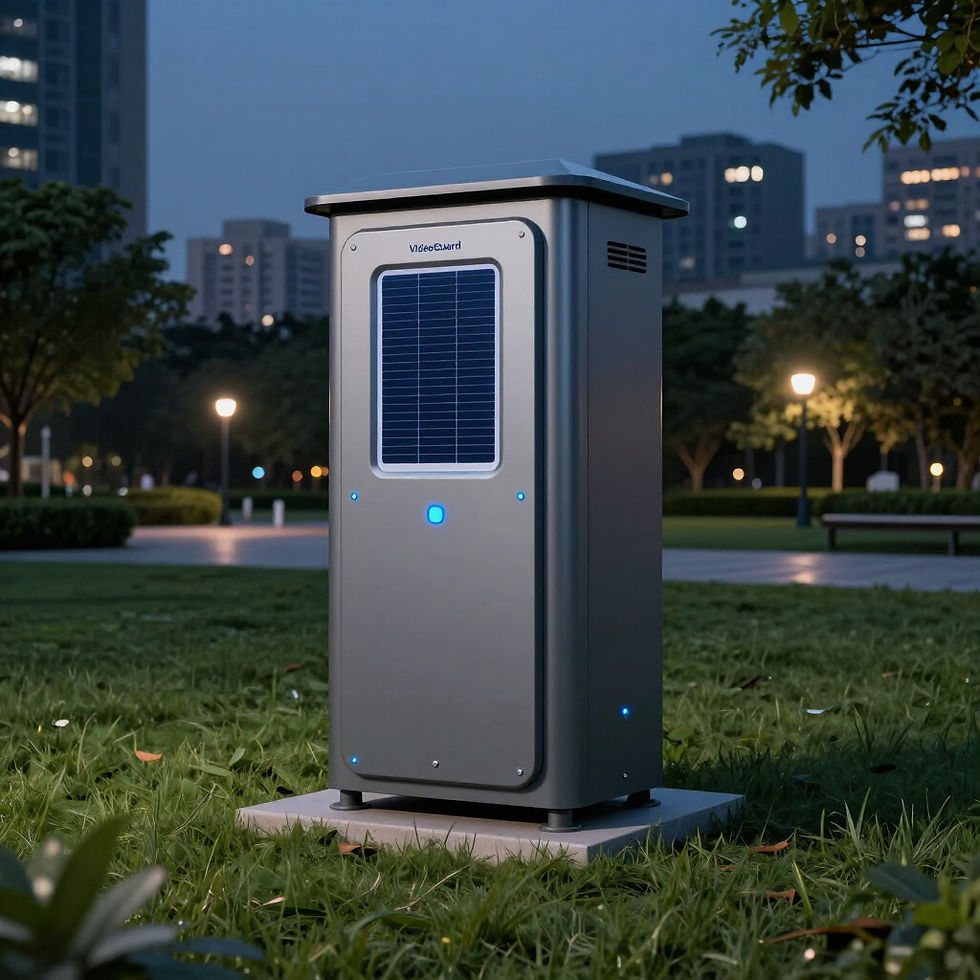
VideoGuard enables park-wide surveillance through a single primary connection point that distributes data to multiple VPU pole locations via wireless links. This eliminates the need for individual cellular modems on every pole, creating a highly efficient network that simplifies infrastructure for public safety and municipal IT.
Connectivity + Edge Processing
IP CAMERA
VPU™ EDGE
CLOUD LINK
Real-time intelligence requires more than just a connection. By combining high-speed backhaul with localized AI processing, VideoGuard reduces latency and ensures critical alerts are generated and transmitted instantly, even in bandwidth-constrained environments.
LAYER 01
Edge Processing
Real-time AI analysis at the point of capture. Reducing latency and bandwidth usage for immediate threat detection.
LAYER 02
Dynamic Connectivity
Reliable backhaul through cellular, Wi-Fi, or municipal fiber. Ensuring the data reaches the command center regardless of environment.
LAYER 03
Cloud Orchestration
Centralized management and historical evidence storage. Secure access to digital evidence from any authorized device.
IT INTEGRATION
No New Servers. No Proprietary Wiring.
Designed for rapid deployment within existing municipal networks. VideoGuard leverages carrier-grade edge processing to eliminate the need for costly back-end infrastructure upgrades, ensuring a seamless fit for IT departments managing complex city-wide systems.
Cloud-Native Architecture
Zero-footprint deployment using secure, encrypted cloud synchronization and decentralized edge management.
Carrier Agnostic
Optimized for 5G/4G/LTE providers without requiring dedicated private APNs or custom backhaul configurations.
Engineered for Carrier Excellence
VideoGuard is built to integrate seamlessly with global carrier infrastructure. By offloading edge processing and optimizing bandwidth usage, we provide a value-added service layer that turns standard connectivity into a mission-critical public safety endpoint. Our platform supports private 5G, LTE, and edge-to-cloud workflows, creating new revenue opportunities for carrier partners while lowering the barrier to city-wide surveillance deployment.
